
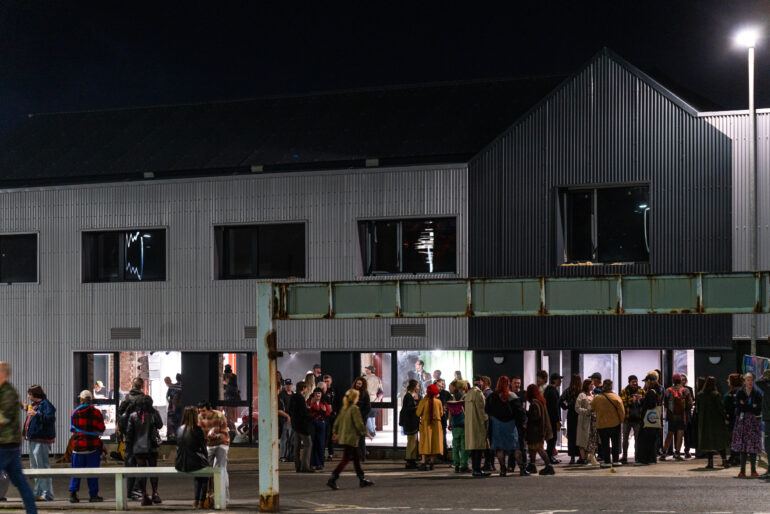
Occupying a permanent 14,000 sq ft creative complex in Middlesbrough, The Auxiliary is entering an exciting new chapter. With studios, workshops, galleries and public spaces under one roof, the building offers greater stability for artists while opening itself up to new audiences. Lee Allcock caught up with The Auxiliary team to discuss the transformation, the building’s industrial history, the support that made it possible and its ambitions for the future.
What does owning the building mean for the organisation and the artists you support?
The Auxiliary is artist-led, flexible and able to move and respond quickly, with a large appetite for ambitious programming. But that focus can sometimes mean structural issues are overlooked. The team’s experience of working with artist-led spaces in different countries has shown how a change of landlord, a change of mood, or an area becoming popular and rents increasing can eventually mean artists being moved out. For that reason, owning a building was always an ambition. While taking on a building can be seen as a risk, the argument is that not owning one is the greater risk. The building now gives The Auxiliary a level of permanence that artist-led organisations rarely get.
How will the new studios, workshops, galleries and public spaces change what The Auxiliary can offer artists and communities in Middlesbrough and across the Tees Valley?
For artists, particularly those using the studios, expectations of what a studio should provide can be quite low. Artists are often working in buildings that aren’t in great repair, and this building was no exception. Now it is warm, dry and secure, with heating and much better lighting. Daylight LEDs make a significant difference, particularly for people working at night. At the same time, artists are encouraged not to be precious about the building. These are studios and workshops where people need to make things, get messy, experiment and work. It is a working building, not a pristine one. For the public, the transformation is different. Previously, the building could be intimidating. It looked dilapidated and empty, and from outside it wasn’t obvious that anything was happening there. Now there is a clear entrance leading directly into the heart of the building, with a much stronger public-facing element.
The project has involved significant investment from the Cultural Development Fund and Middlesbrough Development Corporation. How important has that support been?
The funding was absolutely essential. Without it, the project simply wouldn’t have happened. However, the bigger story is the support and belief that Middlesbrough Council placed in The Auxiliary. The council made the initial application to the Cultural Development Fund, recognising that The Auxiliary was ready to take on a capital project of this scale. It was bid-ready, at the right RIBA stage, and there was a belief that the investment could have a significant impact. The council then led on project management, so its involvement went far beyond securing funding.
The building has had many different lives. What was it about its history and industrial character that made it such an exciting opportunity?
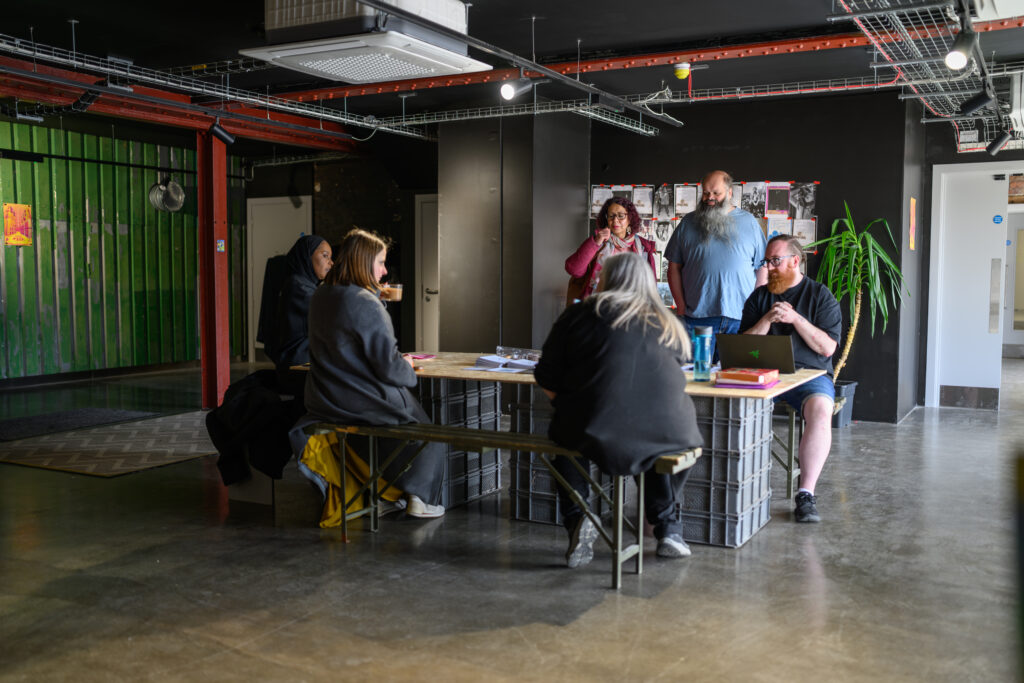
The building has always had opportunity built into it. The steel portal-frame warehouse is enormous and open-plan, with five-and-a-half to six-metre-high ceilings, allowing people to work at scale. The masonry building is completely different: an old stone building dating back to around 1886, full of character and traces of its industrial past, including old steelwork, timber features and original flooring. Together, the buildings provide an interesting combination of scale, history and texture. The site has been used for storage, was part of the fruit market and is believed to have housed an Irish society, a lovely connection for an Irish-led organisation. Before the warehouse was built, there was also a hotel on the site – the Raglan Inn or Raglan Hotel. Old census records have even suggested that somebody may still be living in Middlesbrough who was born in the hotel. That continuity is appealing. A hotel is a place where people arrive, spend time and move on. In some ways, that is what The Auxiliary wants to be: a welcoming place where people come and go, make things, meet each other and leave their mark.
Looking ahead, what is your vision for The Auxiliary over the next five to ten years?
Permanence is the big thing. Having the building gives The Auxiliary a presence in the town that isn’t always guaranteed for creative organisations. The next phase is about building on that permanence, applying for the next round of National Portfolio funding while continuing to develop programmes and build national and international partnerships. For a long time, much of the organisation’s energy went into creating the conditions that allowed The Auxiliary to exist: finding spaces, securing funding, developing the building and putting infrastructure in place. Now there is an opportunity to focus more energy on what happens inside it. Ultimately, the vision is about securing a creative space for the long term, demonstrating what can be built from very little, and creating the conditions for other people to build things too.
To find out more about The Auxiliary, head to theauxiliary.co.uk.
