
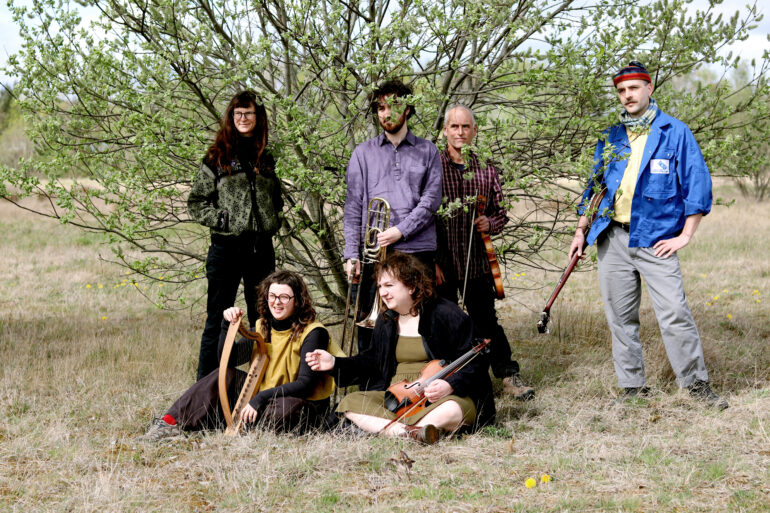
Emerging from Newcastle’s folk underground, Powtes are less a conventional band than a slowly evolving collective. Across fiddle, harp, trombone, banjo, flute and voice, the six-piece have spent the last two years shaping ‘Destroying a Living’, a debut album due this August that draws together histories of enclosure, ecological collapse and resistance.
At the centre of the project is Gus Beamish, whose songs first began taking shape while living in a remote valley in Chile with limited electricity and almost no recording equipment. The material marked a move away from the electronic and experimental work Gus had previously made through projects such as Bewilderbeast, Kuro, BC and Makeness, instead embracing sparse arrangements and folk ballad traditions.
“When I first wrote the core of the songs, they weren’t really songs as such,” he explains. “They were more like structures with simple guitar parts and vocal figures set to words.”
After relocating to Newcastle, those skeletal ideas gradually transformed into something much larger. Gus began “collecting people” around the songs, eventually forming Powtes with Phil Tyler, Katy Sillem, Frankie Insley, Peter Bourne and Emily Toth. Through long improvisational sessions and home recordings spread across three Newcastle houses, the band slowly developed the album’s expansive yet intimate sound.
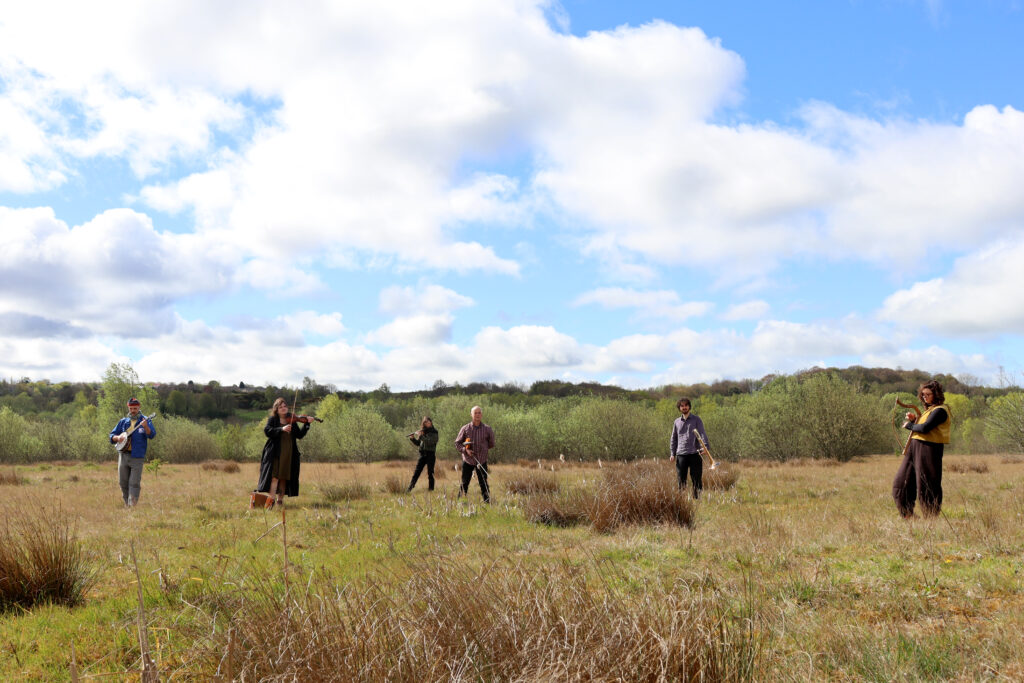
“Every rehearsal, we sit down and eat a meal together,” says Gus. “It’s the most convivial band that I’ve ever been part of.”
That communal spirit runs through ‘Destroying a Living’, even as the record explores darker themes. Inspired by the draining of the Fens and the violent histories of land enclosure in East Anglia, the album reflects on the emergence of capitalism and the communities that resisted it.
New single ‘Green Afterglow’, due this month, acts as the record’s final chapter and perhaps its strangest. While much of ‘Destroying a Living’ looks backwards through histories of enclosure and resistance, the track shifts into speculative fiction, imagining a future in which climate collapse has re-flooded the Fens and returned them to a wild, “ungovernable” landscape.
Bleak, beautiful and deeply human, Powtes’ music feels rooted in folk tradition while refusing to remain bound by it. Beneath the album’s haunting textures and improvised arrangements lies a simple but defiant idea: another world is possible.
You can find more from Powtes at powtes.bandcamp.com.
